Notes on International Standard ISO 13408-1: 2008

One of the main International Standards used as a reference document in a sterile pharmaceutical microbiology laboratory is ISO13408 – Aseptic Processing of Health Care Products .  Long ago, I reviewed the 1998 edition.  More recently, I acquired ISO 13208-1 (2008), so I compared my notes from the 1988 version with what is stated in the 2008 version.  The use of italics is my way of emphasising points.  Notes on changes are in blue.

INTRODUCTION

When I reviewed the 1998 edition, I did not note down any of the introduction.

  • Anything labelled as sterile needs to made under tight control as part of a Quality Management System
  • This part of the ISO focusses on the risks to the maintenance of sterility
  • All possible sources of contamination need to be controlled and a risk based approach is recommended
  • Appropriate validation of the aseptic process is needed and process simulation trials are an essential part of this

Continue reading

Notes on USP36-NF31 <1116 - Microbiological Evaluation of Cleanrooms and Other Controlled Environments>

The USP is the United State’s Pharmacopeia.

If you are selling pharmaceuticals in the USA, you need to follow the USP and are subject to FDA regulation.  For the layperson, a pharmacopeia is an official publication containing a list of medicinal drugs with their effects and directions for their manufacturing, testing and use.

The latest iteration of this section of the USP is 39-NF34,  The last version I managed to get my hands on was USP36 NF31.  I’ve compared the two and noted the changes from the NF I reviewed initially.  The identified changes are in blue. Continue reading

Notes on PIC/S Guide for Good Manufacturing Practice for Medicinal Products (2009)

When I was working in the sterile pharmaceutical industry, I reviewed the The Australian Code of Good Manufacturing Practice for Medicinal Products (2002) as part of my self-development.  This code was  revoked effective from 1 July 2010 and replaced by the PICS Guide for Good Manufacturing Practice for Medicinal Products 2009, as adopted in Therapeutic Goods (Manufacturing Principles) Determination No. 1 of 2009.  Here’s the original review.

I have now reviewed the PICS Guide for Good Manufacturing Practice for Medicinal Products 2009, from the stand point of a microbiologist working collaboratively in a sterile pharma plant.  What my review does is make note of the salient points and I add comments to some.

Both the revoked 2002 Australian GMP code and the 2009 PICs guide are based on ICH Q&A Good Manufacturing practice Guide for Active Pharmaceutical Ingredients which was last modified in 2000.  In 2015 21 pages worth of clarifications were published to clear up some technical questions and to remove ambiguities.  Looking at them, I’m not sure why clarification was needed as they all seem straight forward and answerable by anyone experienced working within a pharmaceutical manufacturing environment.  This means that despite having “no recent experience” as deemed by some potential employers, my knowledge is still bang up to date. Combine that with my fantastic memory and impressive technical skills and I’d be an asset to your company. Continue reading

Project Management

Throughout my career I have contributed to and supported a range of operational, laboratory, quality, and systems improvement projects across pharmaceutical and dairy manufacturing environments. These projects have included validation activities, process improvement initiatives, laboratory system implementation, documentation redesign, and quality system enhancements.

A strong focus throughout this work has been improving compliance, traceability, operational efficiency, and usability within regulated environments. Continue reading

post

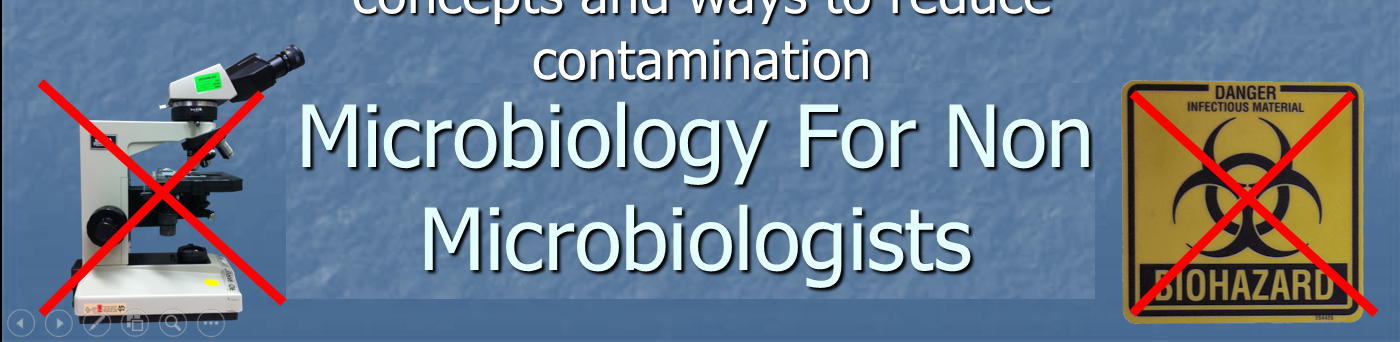
Microbiology For Non Microbiolgists

I have experience developing training and presenting it to small to medium sized groups. Part of this process involves determining the way in which to present the training. Once such way to use some form of visuals in support of speaking. For my Microbiology for Non Microbiologists course, I used Microsoft Powerpoint.

Duration of Session:

  • 60 minutes x1, followed by 10 minutes x1 (display style).  Include practical component.
  • Number of attendees: 5-10.  Can be presented to up to 30.

Continue reading

GMP Manual

The Question posed on LinkedIn.

“Dear experts..
Is there any links to get the chapters of the GMP manual ?”

My advice:

The ICH link is good as you’ll be able to download the documents various GMP guidance such as PIC/s recommendations and regulatory guide lines such as the Aust Code of GMP (as an example) are based on.

You can then find valuable information on recommendations from sources such as the FDA, eg http://www.fda.gov/downloads/Drugs/…/Guidances/ucm073517.pdf

So we might provide a less general answer, what specifically are you looking for?