post

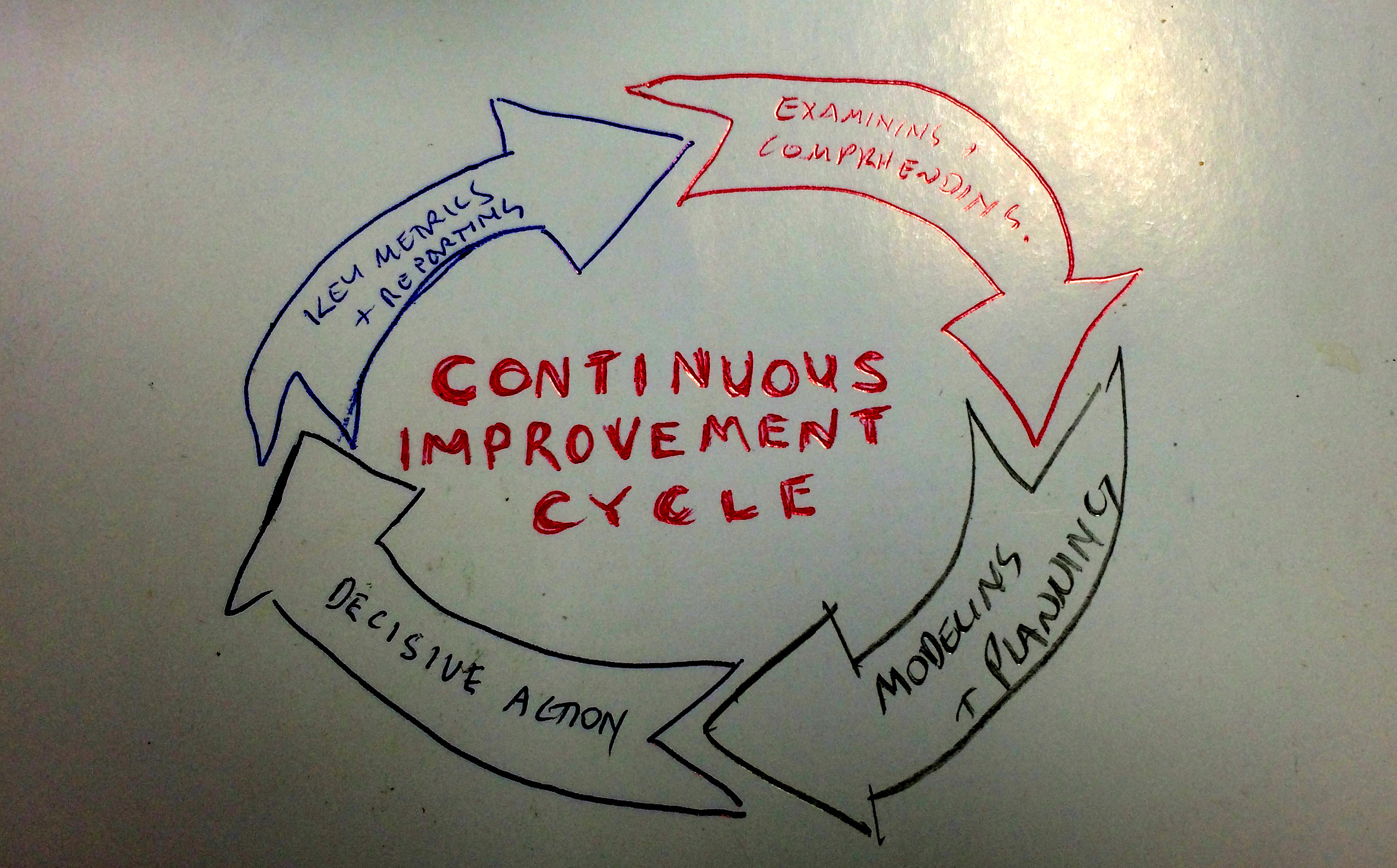
Continuous Improvement

This is something I tend to be weak on when it comes to answering in an interview (it does not come up much).  Hence this post to begin to get things ticking over in my brain.

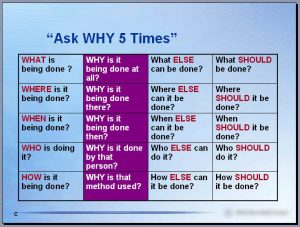
Continuous improvement (CI) is something I’ve routinely done as I’ve updated documents, mapped business processes or followed procedures.  I’ve not followed any official 6 sigma methodology (also known as Lean, Agile, Kaizen) as such, though I have the basics if this in my survival kit and ask why 5 times.

Ask Why 5 Times - pinned to the wall of my cubicle/office

Ask Why 5 Times – pinned to the wall of my cubicle/office

CI is a method for identifying opportunities for streamlining work and reducing waste. Continue reading

post

More on my Personal Style “The Administrator”

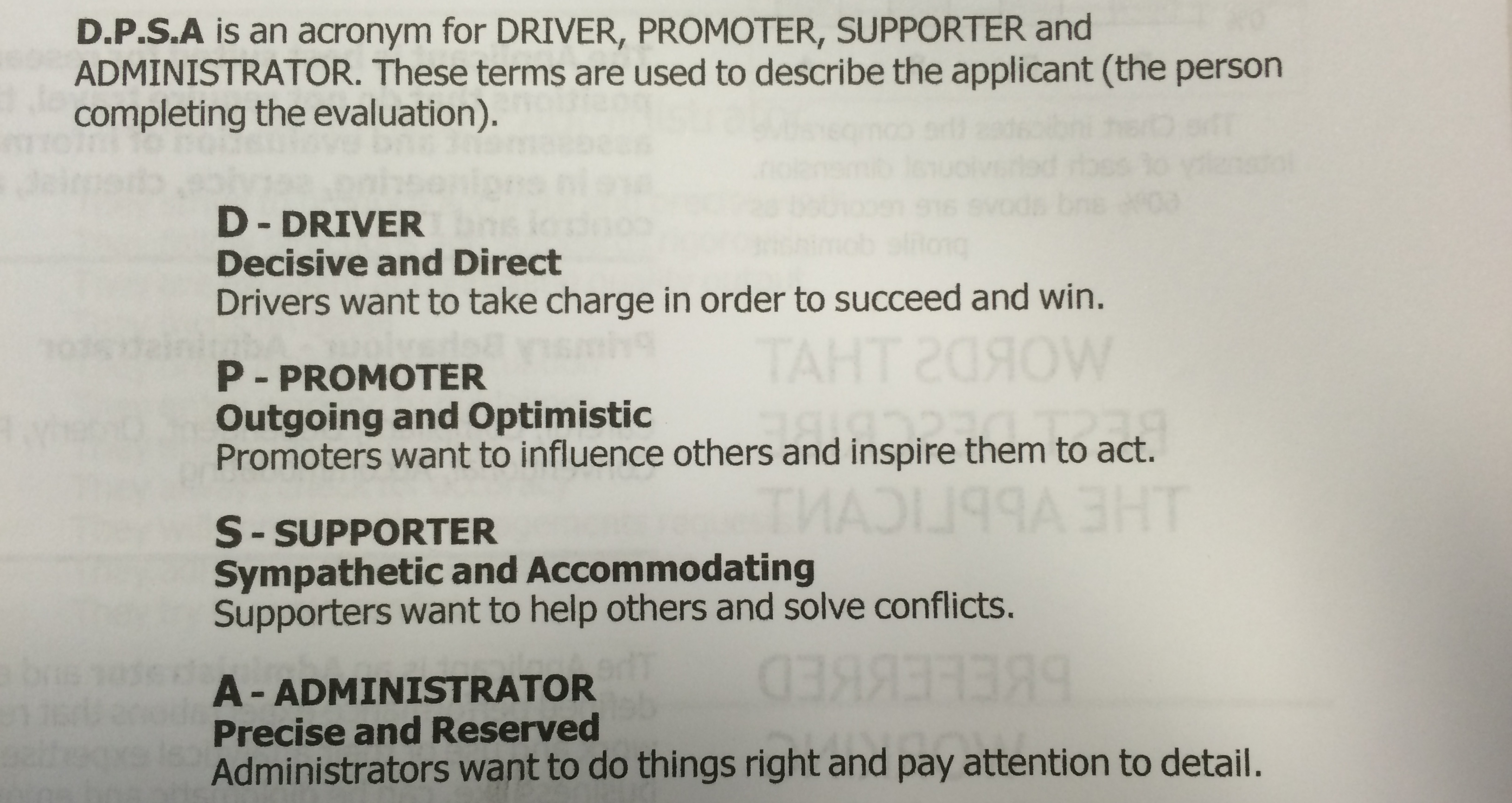
As you may have read, I’m an INTJ (or Architect) and a DiSC Panther.  As part of recent communication with a recruiter, I’ve partaken in yet another personality test.  This one pegs me as an Administrator.  Keeping in mind a certain amount of salt needs to be taken with such tests as these tests are all made up and personalties are fluid.

An Administrator is precise and reserved.  They want to do things right and pay attention to detail.  Had this test produced the same output as my DiSC appraisal, I’d most likely have been a Driver (they want to take charge in order to succeed and win) with a smattering of Promoter (wanting to influence others and inspire them to act).  As it is, I’m, 38% Driver, 50% promoter and 100% Administrator according the latest test. Continue reading

post

Developing a Quality Management System

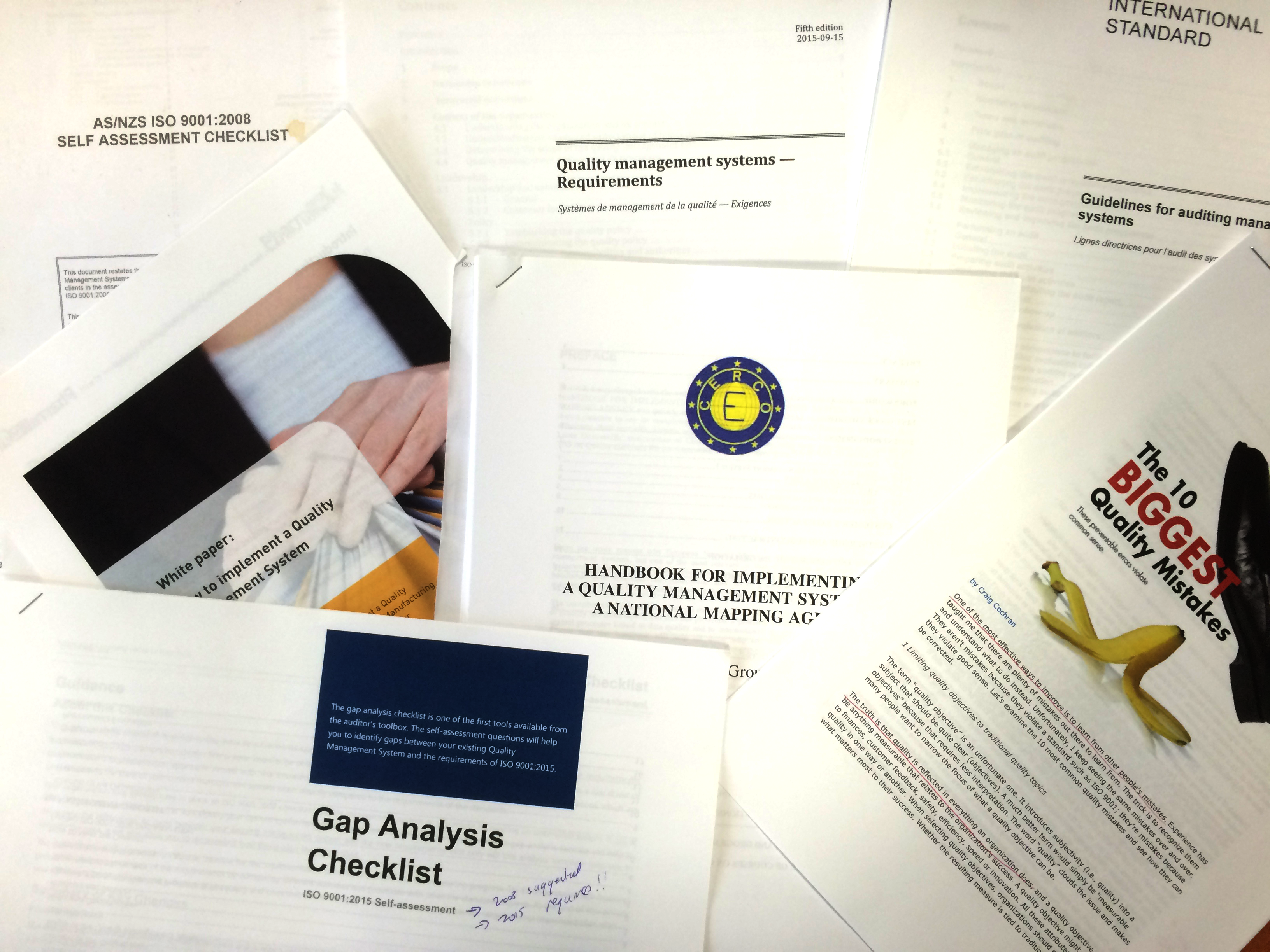
Why would anyone want a Quality Management System, or QMS?  To quote the ISO, “It helps businesses and organisations be more efficient and improve customer satisfaction.”  The document that details such a system is ISO 9001 (2015) Quality Management Systems.  A large part of this ISO reads as a business plan – improve performance; sustainable development; identify opportunities / enhance customer satisfaction etc.  Overall, the ISO employs the approach of Plan-Do-Check-Act and requires risk-based thinking. Continue reading

Using MS Excel or MS Access for Tracking

The Question posed on LinkedIn:

“Quality Assurance of Excel-Tables or Access-Databases used for tracking Change Control Procedures , Deviations, or Complaint handling

While larger companies nowadays use validated systems such as Trackwise, SAP modules and the like for following-up on their CCPs, deviations, CAPAs etc., in GMP inspections of smaller companies I usually encounter some sort of electronic Access- or Excel-based lists that are used (typically by QA) for this purpose, i.e. entering cases, assigning event ID’s, and supervising the progress of investigations / implementation measures until approval / close-out.

These lists a quite critical, especially when many events have to be dealt with, a.o. because of the risk that certain events might get ‘forgotten’.

Nevertheless, I see quite often that little is done to ensure that entries in these lists are correct and uptodate. Another issue is controlled handling of hardcopies of these lists which often, not astonishingly, are outdated as soon as they come out of the printer.
Any ideas what it makes challenging to deal with these lists? What are proven good practices worthwhile to share?”

My reply to this was:

Just like for word, Excel has a revision tracking feature.

There are ways to log changes to tables data in Access, but none are particularly robust.

It all boils down to using the right tool for the job. Is Excel or Access a suitably regulatory compliant solution or do you need to use something else?

The last line of the my comment sums things up nicely.
Policy vs Standard Operating Proceedure vs Operator Instruction

What follows will form part of a post tentatively titled “GMP Technical Writing”. The larger post will incorporate aspects of Writing Technical Reports and The Need for Documentation and detail the hierarchy of documents within a Quality Management System, what information goes where and how to conduct business process mapping. I’m tossing up on whether to present this as a series of posts or as some sort of presentation style document (pdf or Powerpoint). Continue reading

Notes on the FDA’s Draft Data Integrity and Compliance With CGMP Guidance for Industry

Having worked in the pharmaceutical industry where I’ve dealt with electronic systems, paper based systems, programmed my own access databases and Excel spreadsheet  and been on projects such as LIMS system validation, I figured I’d make notes on the FDA’s 2016 guidance for industry document regarding Data Integrity and Compliance With CGMP.  This draft is for currently open for comment and the guidance addresses data integrity in:

  • drug manufacture
  • finished pharmaceuticals
  • positron emission tomography drugs

Continue reading

Why You Need an INTJ Working With You

Introduction

When I take the Myers-Brigs personality test, I without fail placed in the INTJ box.  What does this mean?

(I)??? (N) Intuitive (T) ??? (J)Judging

It means I am a rare breed – just 2% of the population are said to fall into this group.  Whether or not that’s an unsubstantiated “fact”, I’ll not go into.

INTJ’s can be summarised (if that is possible) as: Continue reading

Notes on ISO 13408-2 (2003) – Aseptic processing of health care products – Part 2 : Filtration

I found the latest ISO online here.  As far as I can tell it is legit (in so far as allowing the ISO online for free) – it certainly is the current ISO.

A recent HR rep from a pharmaceutical company contacted me regarding an open role I Sydney.  After passing my details along to “senior management”, the response I got was “We have had some discussion with senior quality managers about your profile and unfortunately they feel your relevant experience in Sterile Micro going back 10 years is a little too long for us ideally”.

Such a response show a lack of foresight from the employer as they do not want the best candidate for the job.  Do they want someone who knows their stuff?  No.  Do they have a commitment to training and staff development?  No. Continue reading

TGA Inspection Trends

My reply to a post on LinkedIn.

Current TGA Inspection trends: This presentation will focus on the common types of deficiencies found by the TGA’s GMP Inspectors as well as some data on the number of inspections performed both locally and overseas and compliance rating outcomes for the inspections performed.

Comment 1 stated “…there are patterns that seem to repeat year after year. Poor QMS, inadequate investigations, lack of training.”

My reply to this was:

“The PIC’S guide to GMP stresses the need for a robust QMS and repeats over and over again the need for documentation, solid investigations and adequate training and retraining. It is a wonder why citations regarding a lack of these keep being given.” Continue reading